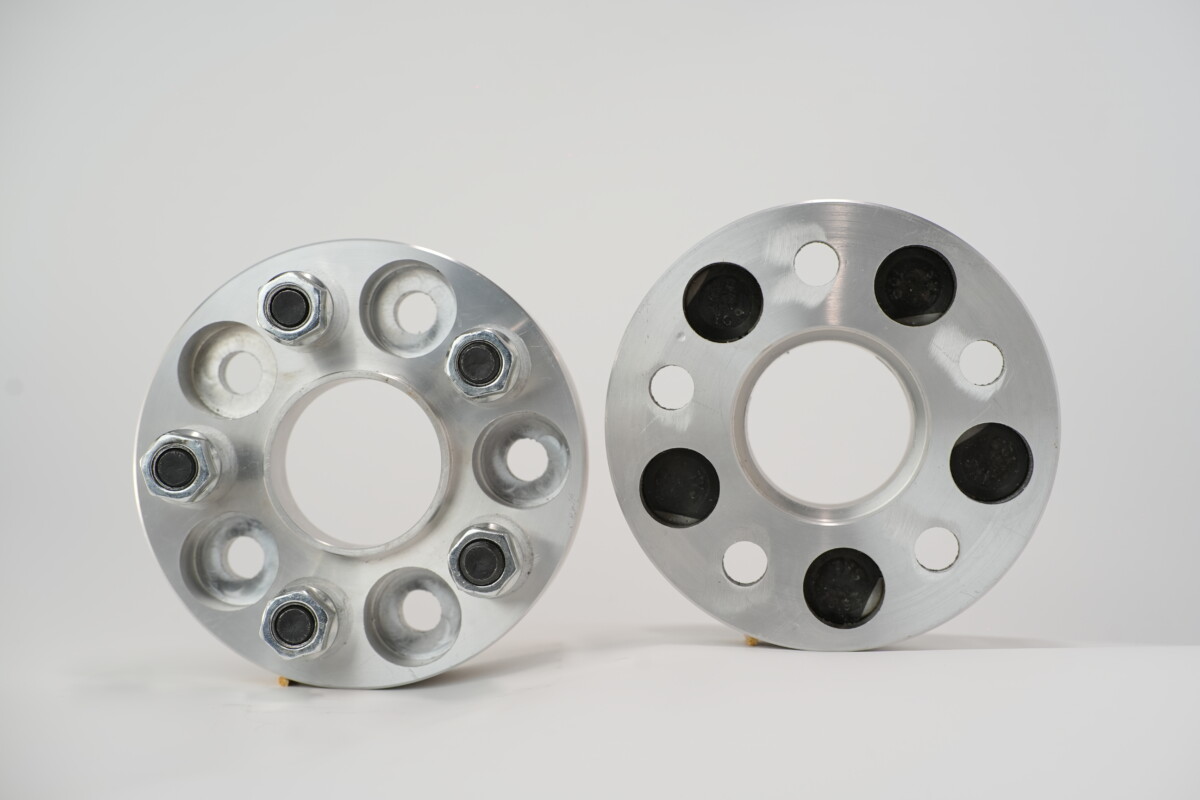
Not every modification is purely cosmetic — a handful of upgrades genuinely change how a car behaves on the road, improving grip, reducing body roll, and giving you more confidence in corners. Here are five modifications that deliver real handling benefits, not just visual ones.
1. Wheel Spacers for a Wider Track
Widening your car’s track width — the distance between the left and right wheels — is one of the most direct ways to improve cornering stability. A wider track lowers the car’s effective center of gravity relative to its wheel base, which reduces the amount a car leans, or “rolls,” during hard cornering. This translates to more predictable, planted handling, particularly noticeable during quick direction changes like lane changes or S-curves.
The key to doing this safely is choosing an appropriately sized spacer for your vehicle — 1.5-inch for most sedans and hatchbacks, up to 2-inch for SUVs with more wheel well clearance — and ensuring proper hub-centric fitment and torque.
2. Performance Tires With the Right Compound
It’s easy to overlook, but tires are the only part of your car actually touching the road, making them arguably the single highest-leverage handling upgrade available. A tire with a stickier compound and a tread pattern designed for dry or wet grip (rather than pure fuel efficiency or tread life) can transform how a car feels in corners, often more dramatically than any suspension change. When combined with a wider stance from spacers, quality tires make the most of the additional track width.
3. A Smaller-Diameter, Thicker-Rimmed Steering Wheel
This one is often filed under “interior mod,” but it has a genuine handling benefit: a smaller steering wheel diameter reduces the amount of arm movement needed for the same amount of wheel rotation, making steering inputs feel quicker and more direct. A thicker rim also improves grip and feedback, particularly under hard cornering when you’re actively fighting the wheel through your hands. It won’t change your car’s actual cornering limits, but it meaningfully improves how connected you feel to what the car is doing.
4. Aftermarket Bucket or Sport Seats
Handling isn’t only about what the car does — it’s also about how well you, the driver, stay planted and in control while it’s happening. Factory seats in most daily-driver cars prioritize comfort over lateral support, meaning you can slide around in the seat during hard cornering, which reduces your ability to make precise inputs. A well-bolstered sport seat holds your torso and hips in place, letting you focus on driving rather than bracing yourself against the door or center console.
5. Fender Flares or Skirting for Wider Wheel Coverage
If you’re combining wheel spacers with wider wheels, fender flares or skirting aren’t just cosmetic — they ensure the now-wider wheel and tire combination remains legally and safely covered, and they can be paired with proper clearance checks to avoid rubbing at full steering lock or suspension compression. This lets you take full advantage of a wider track and stickier tires without compromising fitment.
A Note on Sequencing These Upgrades
If you’re planning several of these at once, a sensible order is:
- Tires first — since they’re the foundation everything else builds on.
- Wheel spacers next, checking clearance carefully as you widen the track.
- Fender flares/skirting if needed to cover the new wheel position.
- Interior upgrades (seats, steering wheel) last, since they don’t affect fitment and can be added at any point.
Always finish with a wheel alignment check whenever track width or ride height changes.
Why These Five and Not Suspension Springs or Sway Bars?
Lowering springs, upgraded sway bars, and adjustable coilovers are certainly capable of improving handling — often more dramatically than any single item on this list. They’re intentionally left off here because they represent a bigger commitment: they typically require professional installation, affect ride comfort and daily usability more significantly, and often need to be tuned as a system rather than dropped in individually. The five modifications above were chosen specifically because they deliver a genuine, noticeable handling benefit while remaining accessible, moderately priced, and largely reversible — a more practical entry point for most drivers before considering a full suspension overhaul.
How to Tell If a Handling Mod Is Actually Working
It’s easy to convince yourself a modification improved handling simply because you spent money and effort on it. A few more objective ways to evaluate the actual effect:
- Body roll observation — have a passenger watch (or record video) of the car’s body movement during the same corner, before and after the modification, at the same speed.
- Consistent test route — use the same stretch of road, ideally with a mix of corners, for before-and-after comparisons rather than relying on general impressions from different drives.
- Tire temperature and wear checks — more even tire wear and more consistent tire temperature across the tread width after a change (measurable with an infrared thermometer) is a genuine, measurable sign of improved grip utilization.
Common Mistakes When Chasing Handling Improvements
- Upgrading tires but neglecting alignment. Even the best tires can’t perform properly on a car with worn or misaligned suspension geometry — get an alignment check as a baseline before investing in tire or spacer upgrades.
- Going straight to the largest spacer size. As covered in our dedicated wheel spacer guide, oversized spacers without proper clearance checks can cause rubbing that undermines the very stability improvement you were chasing.
- Ignoring tire pressure. This is free to adjust and has a surprisingly large effect on handling feel — many drivers chase expensive modifications while running incorrect tire pressures that are actively working against them.
- Changing multiple variables at once. If you upgrade tires, spacers, and seats all in one weekend, you’ll struggle to isolate which change contributed what to the improved feel — valuable information if you want to fine-tune further.
Frequently Asked Questions
Will these modifications affect my car’s fuel efficiency?
Wider track width and stickier tires can very slightly increase rolling resistance, which may have a marginal effect on fuel economy. In practice, this effect is small compared to driving style and is generally considered a reasonable trade-off for the handling benefit by most enthusiasts.
Do I need all five modifications to see a real improvement?
No — each of these delivers a noticeable benefit independently. Tires and wheel spacers tend to have the most immediately obvious effect on outright grip and stability, while the seat and steering wheel changes are more about driver connection and confidence.
Final Thoughts
Genuine handling improvements come from a combination of tire grip, track width, and driver connection to the car — not any single flashy part. These five upgrades work well individually, but they compound nicely when combined thoughtfully, giving you a car that not only looks the part but actually handles like it too.